

Dreaming together
METASKILLS Chapter 31

Personal mastery can only have meaning in the context of a group. None of us can succeed alone, even those whose work is mostly solitary. We all need society, culture, education, government, and industry to provide a framework in which mastery matters, and in which mastery can be learned. Furthermore, in a growing number of domains, nothing meaningful can be accomplished without the cooperation of a diverse set of players.
Creative collaboration, as a business competency, can’t be confined to the R&D department. One reason industry has been less than creative during the last century is that innovation was disconnected from business strategy. It was locked in a small, windowless room in the basement, where it couldn’t interfere with the running of the company.
In the Robotic Age, creative collaboration needs to escape the lab, linking people from top to bottom, beginning to end, across disciplines and over regional boundaries. It must become a day-one activity that’s promoted and modeled by leaders, instead of a follow-on activity that only kicks in after a strategy has been endorsed.
Creative collaboration needs to escape the lab, linking people from top to bottom, beginning to end, across disciplines, and over regional boundaries.
The concept of brainstorming was introduced by Alex Osborn in Applied Imagination, a 1953 book that’s still worth reading. He recommended that a brainstorm group consist of five to ten people, including both “brass and rookies.” At least two people in the group should be self-starters, and they should be “sparking” from the moment the problem is stated. He observed that larger groups are better at getting buy-in on broad solutions, and smaller groups are better at solving specific problems. So far, so good.
The key to brainstorming, believed Osborn, was to foster an atmosphere in which judgment was temporarily suspended. When participants fret over criticism, they hold back or edit their ideas to remove the threat of embarassment. Most people take this principle as gospel, knowing from direct experience that a brainstorming session can quickly turn into a sniping session.
“The crazier the idea the better,” he always said. “It is easier to tone down than to think up.” In Osborn’s version of the game: 1) judgment was suspended; 2) wildness was welcomed; 3) quantity was wanted; 4) combination and improvement were sought. The only problem: innovation was absent. Most of the early brainstorming groups that suspended judgment had a lot of fun but little success.
There’s a big gap between good crazy and bad crazy. Good crazy is the kind of idea that seems crazy on the surface, but on closer examination is actually quite smart. Bad crazy is just crazy. Brainstorming groups that followed the rule of suspended judgment could often cover the walls with hundreds of ideas, but then they’d run out of energy before they could sort them and turn them into workable solutions. Crazy thinking can be frustrating when it turns into a tedious, thousand-monkeys exercise. This kind of session, in which all ideas are welcome and political correctness reigns, might be called softball brainstorming.
When the mission is critical and the time is short, however, what works best is hardball brainstorming, in which participants are experienced, well matched, and focused like a laser on the problem to be solved.
In hardball sessions, ideas are judged as they’re pitched, producing not discouragement but more ideas, as thoughts bounce up against thoughts, deflecting minds into new areas of consideration. Instead of keeping judgment on a leash, hardballers apply more judgment. But it’s creative judgment, based on the knowledge of what a great idea looks like as it moves through its various stages.
This is not to say that sessions like these are always pleasant. Stretching the imagination can be draining work, and tempers can flare. Therefore the main rule in hardball is to focus not on who is best but what is best. When everyone is working toward a shared goal, lightly bruised egos are quickly salved by group success.
In both kinds of brainstorming, hardball and softball, there’s a necessary tension between contrariness and cooperation. Cooperation is essential for achieving an outcome, but without a certain amount of contrary input, the outcome is likely to be mushy. Studies by organizational psychologists have shown that individuals, not groups, tend to be better at divergent thinking, while groups are better at convergent thinking. When faced by complexity that tests the biological limits the brain, groups often default to a herd mentality instead of fighting for divergent ideas.
To guard against herd thinking, shared goals should be as bold as possible. They shouldn’t be ordinary or safe. As Howard Schultz said about the challenge of engaging stakeholders at Starbucks, “Who wants a dream that’s near-fetched?” The simplest way to develop bold goals is to start by wishing. When you get the members of a group to start wishing, their dreams can quickly become roadmaps. There’s a reason people tell you to be careful what you wish for. It works.
For large design projects, especially those which benefit from multidisciplinary teams, there’s an ongoing search for “T-shaped” people. A T-shaped person is one who has a strong descender (the vertical stroke of the T) and a well-developed crossbar (the horizontal stroke). The descender represents deep experience in a certain discipline, and the crossbar represents the ability to work with people across disciplines. Like rock bands, creative groups need specialists who can contribute something unique to the collaboration. The last thing they need is I-shaped people—specialists who have useful skills but can’t work with others.
Finally, both rock bands and creative groups need one more member: an X-shaped person. This is the one whose main role—though not the only role—is to bring the group together and facilitate progress toward a goal. X-shaped people are rare, because they usually have to prove their worth by first mastering a discipline. The leadership gene is an extra gene, a skill on top of a skill. John Lasseter has been a great creative leader for Pixar, but he developed his credibility and his deep-domain expertise by working first as an animator.
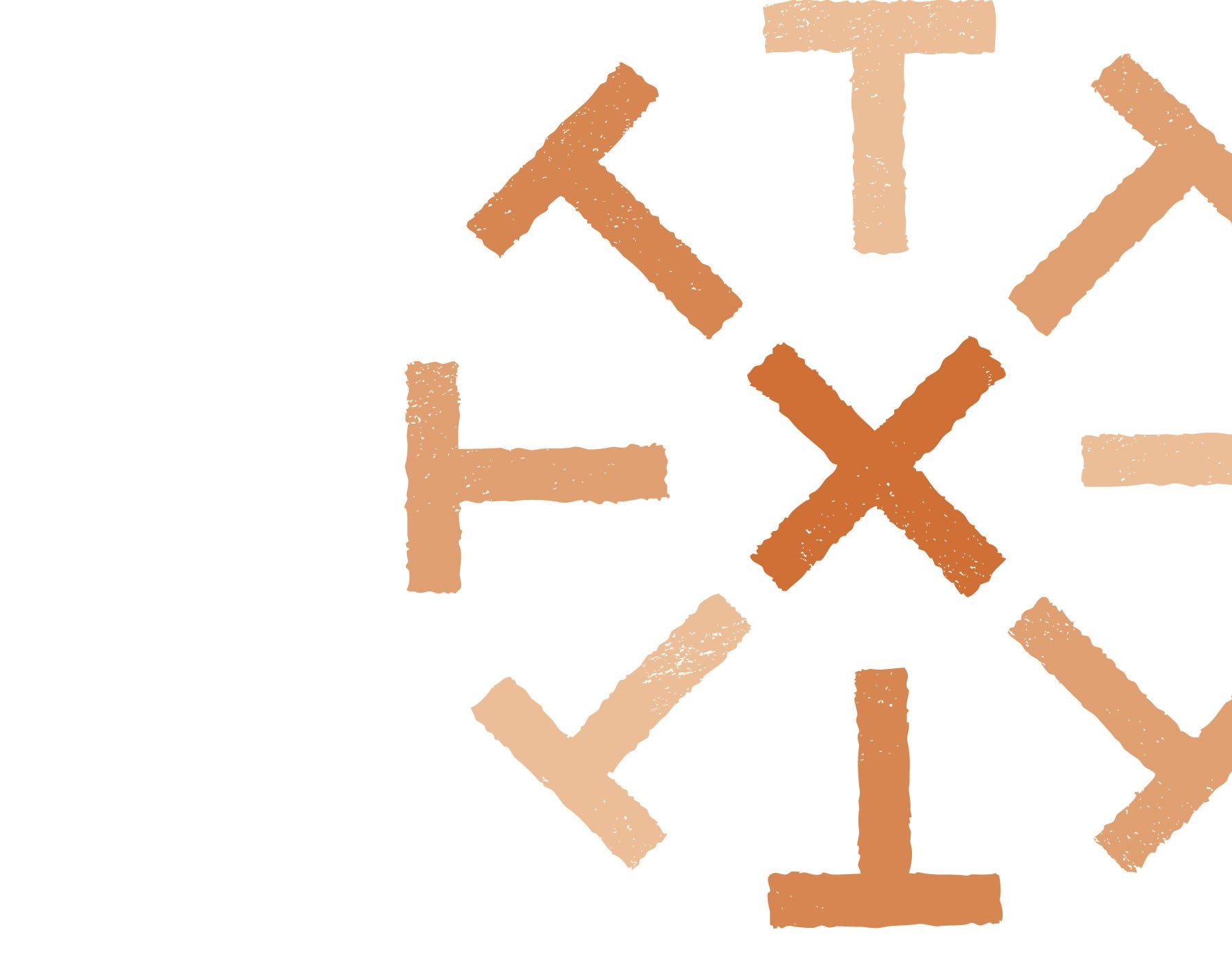
When X-shaped people attract the right T-shaped people to the mission, magic can happen. A surprising number of players will volunteer to dream together and work together if the goal is bold enough and the leader respected. This is especially true in an age of virtual collaboration. Anyone who has watched the exponential growth of Wikipedia can sense the power of collaboration. And while contributions to Wikipedia are voluntary, nothing would have happened without the passionate facilitation of its founder, Jimmy Wales.
Today there’s a new variation of collaboration that takes advantage of widespread connectivity. Swarming, as it was originally termed by the military, is a method for attacking a problem or a project from a number of angles at once. Rather than structure a project as a linear exercise, the swarming method unleashes the full power of simultaneous collaboration. It lets you jumpstart the project by bringing a variety of minds together at the start, then tap the talents of a wide range of disciplines throughout the process.
Today there’s a new variation of collaboration that takes advantage of connectivity: swarming.
Let’s say you manage a design firm or an internal marketing department. As soon as you get an assignment, you might embark on the usual process of gathering executive interviews, doing customer research, brainstorming concepts, putting some initial thoughts on paper, making prototypes, testing them, refining them, and finally producing them. Because the steps are linear, each one depends on the one before, and the whole process takes ten weeks.
Swarming, by contrast, lets you interview, research, brainstorm, sketch, and prototype in parallel, with each activity informing the others, while the team quickly builds up a rich understanding of the project’s possibilities. Not only is it faster, but it skirts the danger of playing “telephone”—the children’s game in which one kid whispers something quickly to a neighbor, who whispers it to the next neighbor down the line, who whispers it to the next neighbor, and so on, until “dancing on the lawn” becomes “Mrs. Johnson’s dog.” With swarming, the project has a better chance to come through in its purest, most focused form.
But let’s be clear about collaboration. A team is only as good as the skills of the individuals in it. While you can learn a lot from working with great people, your value to the team comes from the quality of your own effort. Whether a T or an X, you still have to develop your own metaskills, create your own thought processes, and do battle by yourself in the dragon zone. A master’s degree won’t help you. Only mastery itself.
Proud "T" here!